
Los eventos como estrategia de marketing superan a la publicidad digital cuando necesitás generar confianza, demostrar productos complejos o activar comunidades, pero solo funcionan si los integrás dentro de un sistema más amplio con captura de datos y seguimiento post-evento. La clave no está en organizar un buen evento, sino en tener la infraestructura para capitalizar cada registro como oportunidad de remarketing y construcción de base de datos propia. Con las herramientas adecuadas, cada evento se convierte en un activo de marca que genera valor mucho después de que termine.
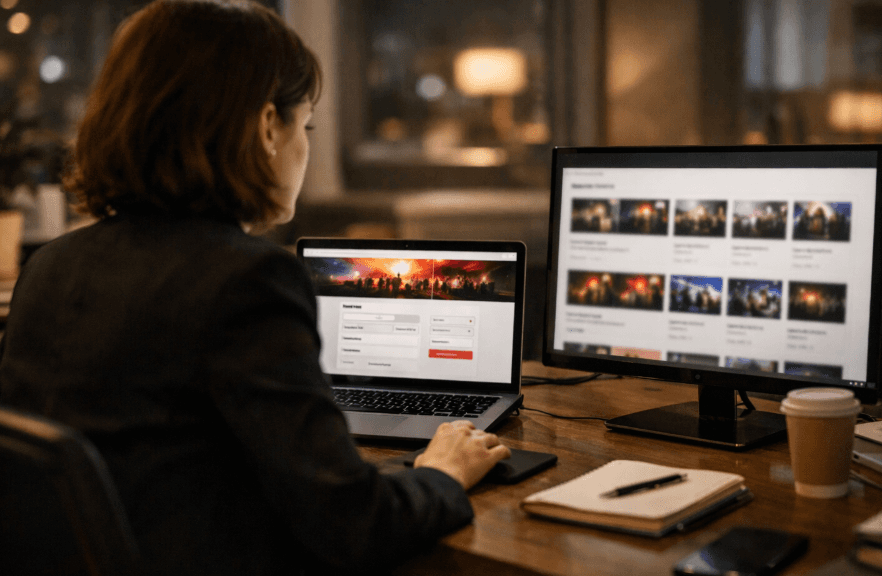
There's a question that's appearing more frequently in marketing meetings: does it make sense to keep investing in events when digital advertising promises measurable results, precise targeting, and immediate scalability?
The answer isn't binary. But there are contexts where events as a marketing strategy far exceed what any performance campaign can achieve. Not because digital ads don't work, but because there are objectives that can only be reached when people are present, attentive, and emotionally engaged.
This article explores when and why events work better than traditional advertising, how to measure their real impact, and what infrastructure you need to turn each event into a brand asset rather than an expense without return.
What it means to use events as marketing strategy
Using events as a marketing strategy means designing in-person or hybrid experiences with a clear business objective: generate demand, position your brand, activate communities, or accelerate purchase decisions.
It's not about organizing an event and hoping something good happens. It's about integrating the event within a broader marketing system, where every touchpoint—from invitation to post-event follow-up—is designed to move specific metrics.
This strategic vision differentiates brand events from social or institutional gatherings. A brand event has KPIs, defined audiences, and an attendee journey designed from first click to final conversion.
The concept is directly related to experiential marketing, a discipline that prioritizes creating memorable experiences as a vehicle for emotional connection with audiences. But while experiential marketing can include point activations, pop-ups, or street interventions, events as marketing strategy usually have more defined structure: date, venue, agenda, target audience, and data capture mechanisms.
The current digital marketing context
Over the past decade, digital marketing became the dominant channel for most brands. The reasons are well-known: low entry costs, granular targeting, real-time metrics, and ability to scale quickly.
But that same success created saturation. Cost per click on platforms like Meta and Google has steadily increased. User attention fragmented across dozens of daily stimuli. And conversion rates, in many industries, began to stagnate or decline.
The problem isn't digital advertising itself. The problem is that ads compete in an environment where everyone is doing the same thing. Feeds are full of advertisements. Inboxes are full of emails. Users developed defense mechanisms: rapid scrolling, ad blockers, automatic distrust.
In this context, events as a marketing channel offer something that ads cannot: sustained attention. When someone attends an event, they're choosing to dedicate time, travel physically, and participate in an experience. That level of commitment can't be bought with CPMs.los costos reales de las ticketeras tradicionales
Events vs digital ads: an honest comparison
In this article, when we talk about digital advertising, we're referring to paid investment in online advertising—like ads on Google, Instagram, or Facebook—aimed at generating reach, clicks, or conversions immediately.
Comparing events with digital advertising isn't comparing apples to apples. They're different tools with different strengths. But there are dimensions where the difference is clear.
Attention and contact depth. A social media ad gets, on average, less than two seconds of attention. An event can maintain attendee attention for hours. That difference in contact depth allows transmitting complex messages, generating real conversations, and building perceptions that a banner could never achieve.
Trust and credibility. Physical presence generates trust in a way that digital cannot replicate. Seeing a product, talking with a representative, meeting other users: all of this builds brand credibility in an accelerated way.
Content generation. A well-produced event generates content for weeks or months. Photos, videos, testimonials, press coverage. That content can feed subsequent advertising campaigns, creating a virtuous cycle where events enhance ads and ads amplify events.
Cost per impact. Here advertising has the volume advantage. Reaching one million people with an ad is cheaper than organizing an event for one thousand. But the impact per person is incomparable. An event attendee can become a brand ambassador, recurring customer, or referral source. A user who saw an ad for two seconds probably won't remember the brand the next day.
Scalability. Advertising scales more easily. Events require logistics, production, coordination. But that same friction is what generates value: because not everyone can do it well.
When events work better than digital ads
It doesn't always make sense to prioritize events over digital advertising. But there are contexts where events as marketing strategy are clearly superior.
When the product requires demonstration. If what you're selling needs to be seen, touched, or experienced to be understood, an event is the best scenario. This applies to technology, food, fashion, automotive, real estate, and many other industries where sensory experience defines the purchase decision.
When the purchase decision is complex. In B2B, especially in high-value sales, the decision cycle involves multiple stakeholders and requires trust building. An event allows accelerating that process by concentrating high-value interactions in one moment.
When you want to activate a community. Brands that build communities—whether users, fans, or professionals—need meeting spaces. Events function as rituals that reinforce belonging and generate extremely high-value organic content.
When advertising is saturated in your vertical. If you compete in a market where everyone invests in the same digital channels, differentiating with brand events can be the way to cut through the noise and capture attention memorably.
When you need first-party data. Every person who registers for an event gives you direct information: name, email, preferences, behavior. That data is yours, not a platform's.elegir una boletería sin comisión And in a world where cookies are disappearing and privacy is increasingly regulated, having your own data is a strategic asset.
How to measure event ROI
One of the most common objections to events as marketing strategy is the difficulty in measuring results. But that difficulty is usually the product of not defining clear metrics from the start, not an inherent limitation of the format.
Event ROI can be measured across multiple dimensions:
Reach metrics. Registrations, confirmed attendees, actual attendance rate, media and social media coverage. These metrics indicate how many people were exposed to the experience.
Engagement metrics. Dwell time, activity participation, booth or speaker interactions, material downloads. These metrics indicate contact depth.
Conversion metrics. Leads generated, meetings scheduled, sales closed during or after the event, discount codes used. These metrics connect the event to business results.
Brand metrics. Pre and post-event surveys on brand perception, attendee Net Promoter Score, social media mentions with sentiment analysis. These metrics capture positioning impact.
Community metrics. New followers, newsletter subscribers, post-event group or forum participation. These metrics indicate if the event generated lasting relationships.
The key is defining which metrics matter before the event according to the objective. A product launch event isn't measured the same way as an existing customer loyalty event.
The most common error when using events as a marketing channel
The most frequent mistake is treating the event as an end in itself, rather than as a node within a broader strategy.
Many brands invest in production, catering, and venue, but neglect what happens before and after. They don't capture data effectively. They don't design a follow-up journey. They don't have infrastructure for remarketing to attendees.
The result is an event that generates good feelings in the moment but doesn't translate into measurable results or lasting relationships.
Events as a marketing channel work when they're integrated into a system. That means:
Capturing data from registration moment.
Segmenting attendees by behavior and interest.
Communicating before, during, and after with relevant messages.
Measuring each funnel stage.
Activating post-event remarketing to convert interest into action.
Without that infrastructure, the event is just an expense. With that infrastructure, the event becomes a pipeline generator and brand asset.
What infrastructure is needed to capitalize on events
For an event to function as a marketing strategy, you need control over three critical elements: registration experience, attendee data, and post-event communication.
Registration experience. The moment someone registers is the first touchpoint with your brand. If that process happens on a generic platform with third-party branding and flows you don't control, you're losing an opportunity to build perception from the start.
Attendee data. Every person who registers is giving you valuable information. But if that data stays on a third-party platform, you can't freely use it for remarketing, segmentation, or analysis. You need the data to be yours, in your database, under your control.
Post-event communication. The event doesn't end when people leave. What you do in the following days and weeks defines whether the event generates results or is forgotten. For that, you need email marketing, automation, and follow-up tools that let you keep the conversation active.
This infrastructure isn't optional. It's what separates organizers who use events as tactics from those who use them as strategy.
The role of white-label ticketing in event marketing
This is where a concept many organizers still don't have on their radar comes in: white-label ticketing.
A traditional ticketing platform or event marketplace lets you sell tickets, but within their ecosystem. The buyer interacts with the platform's brand, not yours. Data stays in their database, not yours. They do the remarketing, not you.
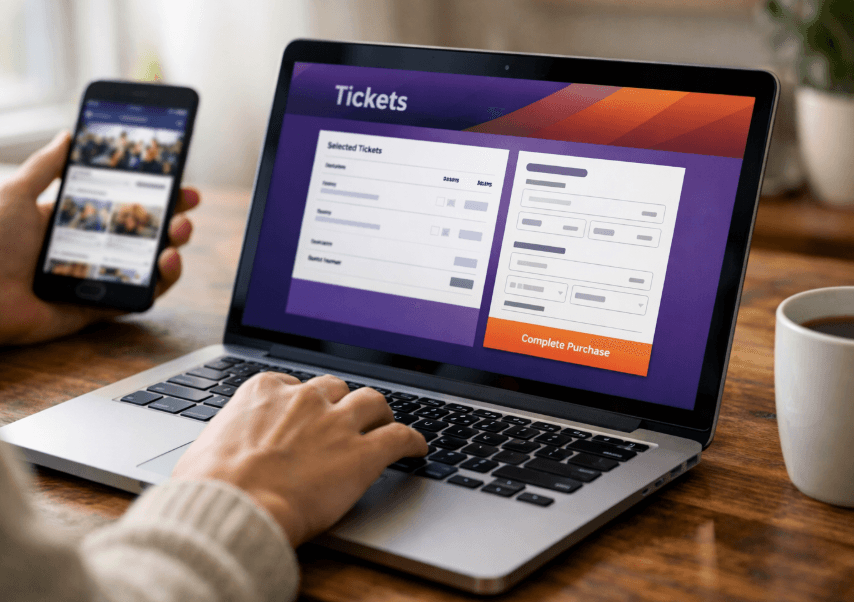
A white-label ticketing platform reverses that logic. Registration and sales happen on your domain, with your branding, with your checkout. Each buyer's data is yours from the first moment. And communication and remarketing tools are at your disposal to activate after the event.
Fanz operates under this model. It's a ticketing platform designed for organizers who understand that every event is an opportunity to build brand and their own database. It allows selling tickets on your own domain, with complete organizer branding, direct payment processing through Stripe, credit cards, ACH, and Apple Pay, and total access to buyer data. Additionally, it includes AI-powered post-event remarketing tools, facilitating attendee activation after the event ends.
It's not about choosing between selling tickets or doing marketing. It's about using ticket sales as part of marketing.
Conclusion
Events as marketing strategy aren't a fad or marginal alternative. They're a high-impact tool that, when well-executed, can exceed digital advertising results in specific contexts.
But for them to work, they need to be treated as what they are: strategic assets that require planning, infrastructure, and follow-up. It's not enough to organize a good event. You have to capture data, measure results, and activate relationships afterward.
Experiential marketing and brand events are gaining relevance precisely because they offer something digital advertising cannot: real attention, emotional connection, and first-party data. In a world where attention is the scarcest resource, generating memorable experiences is a competitive advantage that's difficult to replicate.
The question isn't whether events work. The question is whether you have the infrastructure to capitalize on them.
Working with a white-label ticketing platform like Fanz is one way to ensure that every event you organize builds your brand, feeds your database, and generates conversion opportunities long after the lights go out.
Because the true event ROI isn't measured only in what happens during the event. It's measured in what happens after.
¿Cuándo conviene más usar eventos que publicidad digital para mi marca?
Los eventos funcionan mejor que la publicidad digital en contextos específicos: cuando tu producto necesita ser demostrado físicamente para entenderse, cuando la decisión de compra es compleja y requiere generar confianza, cuando querés activar una comunidad de usuarios o fans, cuando tu mercado está saturado de publicidad digital, o cuando necesitás datos propios de primera mano. Los eventos ofrecen atención sostenida y conexión emocional que los anuncios digitales no pueden replicar.
¿Cómo puedo medir el ROI real de mis eventos de marketing?
El ROI de eventos se mide en múltiples dimensiones: métricas de alcance como registraciones y asistencia real, métricas de engagement como tiempo de permanencia e interacciones, métricas de conversión como leads generados y ventas cerradas post-evento, métricas de marca mediante encuestas pre y post-evento, y métricas de comunidad como nuevos seguidores y suscriptores. Lo clave es definir qué métricas importan antes del evento según tu objetivo específico.
¿Qué infraestructura necesito para que mis eventos generen resultados de marketing?
Para capitalizar eventos necesitás control sobre tres elementos críticos: experiencia de registro con tu branding, datos de asistentes en tu propia base de datos, y comunicación post-evento con herramientas de email marketing y automatización. Sin esta infraestructura, el evento queda como un gasto. Con ella, se convierte en un generador de pipeline y activo de marca que sigue trabajando después del evento.
¿Qué ventajas tienen los eventos sobre los anuncios digitales en términos de impacto?
Los eventos superan a los anuncios digitales en profundidad de contacto: un anuncio obtiene menos de dos segundos de atención, un evento mantiene atención por horas. Generan mayor confianza por la presencia física, producen contenido para semanas, y aunque el costo por alcance es mayor, el impacto por persona es incomparable. Un asistente puede convertirse en embajador de marca, cliente recurrente o fuente de referidos.
¿Qué es el ticketing white-label y cómo ayuda en el marketing de eventos?
El ticketing white-label permite vender entradas en tu propio dominio, con tu marca, manteniendo todos los datos de compradores en tu base. A diferencia de plataformas tradicionales donde interactuás con la marca de la plataforma, acá el comprador interactúa solo con tu marca. Esto te da control total sobre la experiencia, los datos y las herramientas de remarketing post-evento, convirtiendo la venta de tickets en parte de tu estrategia de marketing.
Tags