
El ticketing en Estados Unidos ya vive su transformación en 2025, donde la inteligencia artificial, los dominios personalizados y la integración directa con procesadores como Stripe definen quién lidera el mercado y quién queda obsoleto. Los organizadores que adoptan plataformas en la nube con remarketing automatizado y validación QR sin conexión multiplican sus ventas y construyen relaciones directas con sus audiencias. Esta evolución tecnológica no es futurista: es la realidad operativa que separa a los eventos exitosos de los que luchan por vender entradas con sistemas tradicionales.
The US ticketing industry is undergoing a profound transformation. Ticketing trends aren't distant predictions: they're technological realities already operating in the market, redefining how tickets are sold, how events are managed, and how audiences access culture and entertainment.
Ticket sales have evolved from a transactional process into an integrated experience where AI, real-time data, payment system integration, and direct user communication converge. In this context, platforms that don't evolve get left behind, while modern solutions consolidate their market leadership.
Fanz operates from the US with proprietary technology, cloud infrastructure, and tools designed for organizers seeking efficiency, control, and concrete results. This article explores the trends already active in 2025 and how they directly impact event management, customer relationships, and commercial performance for promoters, theaters, festivals, and cultural companies.
2025 Context: How Events and Consumers Are Changing
The US events market is experiencing accelerated change. Users demand seamless experiences, instant purchases, and personalized communication. Social media functions as discovery and conversion channels, not just promotion platforms. Audiences compare, research, and decide in seconds, from mobile devices at any time of day.
Organizers, meanwhile, face complex operational challenges: managing multiple sales channels, automating marketing processes, accessing precise audience data, and collecting payments without delays or intermediaries. Technology is no longer optional: it's the factor that determines whether an event sells its tickets or not.
In this scenario, traditional ticketing systems—centralized, slow, and with obsolete interfaces—lose relevance. Companies leading the new era are those integrating native cloud solutions, direct payment processors like Stripe, AI tools for automatic remarketing, and custom domains for each organizer.
The United States positions itself as an active innovation laboratory in the sector. Local platforms develop technology adapted to market needs: payments in USD, English support, integration with US social networks, and systems operating without latency or external dependencies.
US consumers have modified their expectations. They seek fast purchase experiences, immediate access to digital tickets, and direct contact with organizers. This evolution in customer behavior drives transformation across the entire entertainment and live events industry.
The 5 Trends Already Defining Ticketing 2025
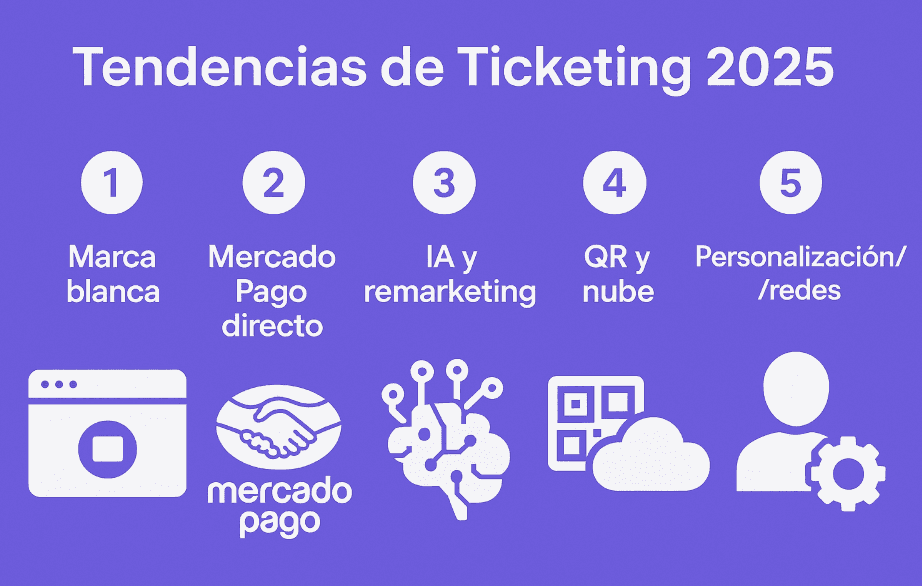
White Label Ticketing and Custom Domains
Digital independence is the foundation of any sustainable strategy in the events sector. Organizers no longer accept selling their tickets under third-party domains, where each sale strengthens the platform's SEO rather than the producer's.
White label ticketing allows each event, theater, or festival to operate with their own domain, build their visual identity, and concentrate all web traffic in their ecosystem. This solution not only improves organic search positioning but also generates public trust and facilitates customer loyalty.
Fanz developed a system where each organizer manages their ticket sales from their website, without external redirects or loss of control. Users purchase in an environment consistent with the event's brand, without distractions or third-party ads. This approach strengthens the direct relationship between producer and customer, eliminating intermediaries that dilute the experience.
The trend toward custom domains is no longer aspirational: it's a basic requirement for any cultural company seeking to professionalize their operation and build long-term digital presence. This operating method marks the difference between depending on centralized platforms or building your own future.
Direct Integration with Stripe and Payment Solutions
Payment processes define the operational efficiency of any ticketing platform. In the US, Stripe has consolidated as the processor preferred by users and organizers for its speed, security, and market penetration.
Platforms that integrate Stripe directly eliminate financial intermediaries, reduce settlement times, and improve customer experience. Each sale reflects instantly in the organizer's account, without withholdings or administrative delays.
Fanz operates with Stripe as its primary processor, allowing funds to reach organizers at the exact moment of purchase. This integration not only optimizes cash flow but also reduces checkout friction: users complete purchases with few clicks, use saved cards, and receive their tickets instantly.
Direct payment technology is one of the most relevant ticketing trends because it simultaneously impacts conversion, liquidity, and audience satisfaction. Systems still operating with slow processors or financial intermediaries create friction that directly affects ticket sales.
Remarketing and Artificial Intelligence
Marketing automation defines the difference between static platforms and dynamic solutions. In 2025, AI is no longer a future promise: it's an operational tool that analyzes data, segments audiences, and executes campaigns without manual intervention.
Automatic remarketing enables reactivating inactive users and sending personalized messages based on each customer's behavior. These tools function in real-time, optimizing contact frequency and communication content, adjusting as new interaction data is collected.
Fanz integrates an AI engine called Fanzly, which manages email campaigns, automates remarketing sequences, and analyzes purchase patterns to improve conversion. Organizers send unlimited communications to their database without additional costs, maintaining total control of their audience relationship and optimizing customer service.
This automation capability transforms event management: what previously required external marketing teams now resolves from the platform panel, with live metrics and instant adjustments. Cart abandonment recovery AI applied to ticketing doesn't just save time: it multiplies results and optimizes each customer request, improving service at every touchpoint.
Artificial intelligence functions enable predictive behavior analysis, advanced audience segmentation, and automatic offer personalization. This represents real innovation in the entertainment industry, where ticket demand is managed with precision and efficiency.
Virtual reality use in some events complements this technology, allowing space and experience previsualization that influences ticket purchase decisions. Event attendees now expect intelligent mobile applications that personalize their experience from ticket purchase to venue access.
For the first time in US ticketing history, organizers have AI tools tailored to their specific needs. This technological evolution transforms every cultural company into a data-driven organization, where customer service automatically optimizes and ticket sales respond to patterns identified by intelligent systems.
Attendees receive personalized offers based on their ticket purchase history, and each time they interact with the platform, the system learns and improves service. Automatic remarketing functions recover lost sales and maintain active communication with each user, ensuring no ticket sales opportunity is lost due to lack of follow-up.
QR and Cloud Systems
Technology infrastructure determines any event's stability. Systems depending on permanent connections generate operational risks, especially at festivals like Coachella, SXSW, or Lollapalooza where connectivity may fail.
Cloud platforms combine scalability and resilience: they operate without crashes during demand peaks and allow ticket validation even without internet connection. QR scanning is critical functionality that guarantees user access under any circumstances.
Fanz developed its infrastructure on cloud technology, ensuring 24/7 availability and response capacity at high-traffic events. Tickets validate via QR code from mobile applications optimized for organizers and access staff.
This technical approach eliminates traditional sector bottlenecks: entry delays, mobile network dependency, and ticket duplication risks. The cloud also facilitates continuous updates, integration with other services, and automatic data backup.
Cloud systems represent fundamental evolution in modern ticketing. They enable scaling events without capacity limits and offer distributed technical support operating from any location.
Personalization and Social Media
US audiences discover events primarily through social media. Instagram, Facebook, and TikTok function as direct sales channels, not just promotion platforms. Ticketing platforms that don't integrate these channels lose immediate conversion opportunities.
User experience personalization is another key trend in 2025. From checkout design to post-purchase messages, every touchpoint must reflect the event's identity and respond to customer preferences.
Fanz allows each organizer to customize their sales site, configure automatic messages, and adapt the purchase flow to their audiences. Social media integration facilitates direct conversion campaigns, where users go from seeing a post to buying tickets in seconds, without leaving familiar digital environments.
This personalization and social connection capability transforms ticket sales into a coherent experience, where organizers maintain brand control and build community around each event. Mobile applications and direct communication tools complement this strategy.
How These Innovations Impact Ticket Sales
Technology trends aren't abstractions: they directly modify each event's commercial indicators. Modern tool integration increases conversion, reduces cart abandonment, improves purchase recurrence, and optimizes return on each marketing campaign.
Real-time data enables adjusting plans on the fly. Organizers access sales metrics, user behavior, and channel efficiency from a centralized panel. Event metrics This operational visibility eliminates uncertainty and facilitates informed decisions.
Administrative process efficiency also impacts profitability. Automated systems reduce manual tasks, minimize errors, and free time for producers to focus on event experience, not technical management.
Cultural companies adopting these solutions report sustained increases in ticket sales, better audience relationships, and greater operational autonomy. Technology becomes a strategic asset, not an operational expense.
Data analysis enables identifying purchase patterns, consumer preferences, and demand trends. This information guides future event organization and improves production team decision-making.
Automated support functions reduce manual requests and improve customer service. Intelligent chatbots and predefined responses accelerate resolution of ticket, schedule, and event access inquiries.
Fanz: The US Platform Already Applying 2025 Trends
Fanz was born in the US with a clear premise: return control to organizers. Every functionality is designed to solve real sector problems, without future promises or speculative roadmaps.
The platform operates with complete white label solutions, allowing theaters, promoters, and festivals to sell under their own domain. It natively integrates Stripe, crediting funds instantly. It includes artificial intelligence tools for automatic remarketing, unlimited email sending, and predictive audience analysis.
Its cloud infrastructure guarantees stability at massive events and enables QR ticket validation. Technical support operates 24/7 with local teams, resolving incidents in real-time and supporting every process stage.
Fanz also integrates a complete CRM where organizers manage their customer database, segment audiences, and execute targeted campaigns. The platform includes analytics tools that track user behavior from first visit to post-event follow-up.
¿Cuáles son las principales tendencias de ticketing que ya están activas en 2025?
Las cinco tendencias principales que ya están operando en el mercado son: ticketing white label con dominios personalizados, integración directa con procesadores de pago como Stripe, remarketing automático con inteligencia artificial, sistemas QR en la nube que funcionan sin conexión, y personalización total integrada con redes sociales. Estas no son predicciones futuras sino realidades tecnológicas que están redefiniendo cómo se venden las entradas y se gestionan los eventos.
¿Por qué es importante el ticketing white label para los organizadores de eventos?
El ticketing white label permite a cada organizador operar con su propio dominio y construir su identidad visual, en lugar de vender entradas bajo dominios de terceros. Esto mejora el posicionamiento en buscadores orgánicos, genera confianza del público y facilita la fidelización de clientes. Los usuarios compran en un ambiente coherente con la marca del evento, sin distracciones ni publicidad externa, fortaleciendo la relación directa entre productor y cliente.
¿Cómo funciona la inteligencia artificial en las plataformas de ticketing modernas?
La IA analiza datos, segmenta audiencias y ejecuta campañas automáticamente sin intervención manual. El remarketing automático reactiva usuarios inactivos enviando mensajes personalizados basados en el comportamiento de cada cliente. Funciona en tiempo real, optimizando la frecuencia de contacto y el contenido de comunicación. También permite análisis predictivo de comportamiento, segmentación avanzada de audiencias y personalización automática de ofertas, transformando la gestión de eventos en una operación basada en datos.
¿Qué ventajas ofrece la integración directa con Stripe en el ticketing?
La integración directa con Stripe elimina intermediarios financieros, reduce tiempos de liquidación y mejora la experiencia del cliente. Cada venta se refleja instantáneamente en la cuenta del organizador, sin retenciones ni demoras administrativas. Los usuarios completan compras con pocos clics, usan tarjetas guardadas y reciben sus entradas al instante. Esto impacta simultáneamente la conversión, la liquidez y la satisfacción de la audiencia.
¿Por qué son importantes los sistemas QR en la nube para eventos masivos?
Los sistemas en la nube combinan escalabilidad y resistencia, operando sin caídas durante picos de demanda y permitiendo validación de entradas incluso sin conexión a internet. Esto es crítico en festivales masivos donde la conectividad puede fallar. Eliminan los cuellos de botella tradicionales del sector: demoras en el ingreso, dependencia de redes móviles y riesgos de duplicación de entradas. También facilitan actualizaciones continuas, integración con otros servicios y respaldo automático de datos.
¿Cómo impactan estas innovaciones tecnológicas en las ventas de entradas?
La integración de herramientas modernas aumenta la conversión, reduce el abandono de carritos, mejora la recurrencia de compra y optimiza el retorno de cada campaña de marketing. Los datos en tiempo real permiten ajustar planes sobre la marcha, y la eficiencia de procesos administrativos impacta la rentabilidad. Las empresas culturales que adoptan estas soluciones reportan aumentos sostenidos en ventas de entradas, mejores relaciones con audiencias y mayor autonomía operacional.
Tags